
THE IMMIGRATION BILL AND DRAFT REGULATIONS
By Gordon Kerr and Marsha Blanche
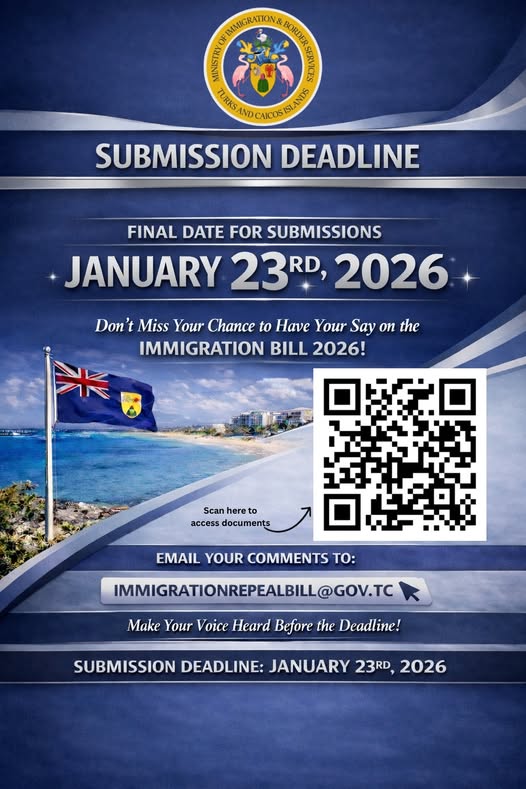
We recently received a copy of the draft Immigration Bill and accompanying Regulations, together with the public consultation guidelines. In keeping with the Government’s request for public input, we began a review of the proposed legislation. It quickly became apparent, however, that the Bill, as currently drafted, is extremely difficult to comprehend and contains numerous errors and omissions.
By way of example, section 22 of the Regulations states that an application for a Residence Permit may only be made if conditions A and B are satisfied. Condition A requires that the applicant be the spouse of an Islander or a British Overseas Territories Citizen, while Condition B requires that the applicant be identified as a person of interest by the Commissioner of Police. These appear to be the only qualifying conditions for a standard Residence Permit. However, section 24 then refers to “Condition D,” despite there being no such condition defined anywhere in the Regulations.
Similarly, section 31 addresses the issuance of a Long-Term Residence Permit, while section 32 sets out the qualifying conditions, including specified investment thresholds, the minimum of which is a $5 million investment in a home or business. Yet section 32(d) provides that an applicant need only demonstrate ownership of, or access to, a residence for personal use, without any qualifying investment threshold at all. This provision effectively renders the preceding subsections meaningless.
In addition, the proposed Homeowner’s Permit appears to mirror the qualifying conditions of the Long-Term Residence Permit in almost every respect, differing primarily in duration. As drafted, it serves little discernible purpose as a separate permit category.
The above examples are not exhaustive, but they illustrate the broader issue: the Bill, in its current form, lacks coherence and internal consistency. Public consultation is not intended to correct fundamental drafting errors. The Government has a responsibility to present draft legislation that clearly and accurately reflects the law it proposes to enact. The purpose of consultation is to solicit public feedback on policy direction and substantive changes to the existing legal framework, not to require stakeholders to reconstruct defective legislation.
A further concern with the draft Bill is the approach to public consultation. The Government appears to have already determined the substance of the legislation and is now seeking feedback after the fact, effectively imposing its will on the public. This places the cart before the horse. Meaningful public engagement should occur beforelegislation is drafted, not after, so that public input can genuinely inform policy development. Moreover, it is unclear how many members of the public have even seen the draft Bill. A process of this significance should have included meetings with targeted private sector interest groups, proper town hall meetings and public forums to educate citizens on the proposed changes and actively solicit their views. Without such engagement, the consultation exercise risks being perceived as procedural rather than substantive.
The quality of legislation matters, particularly in an area as critical as immigration, which has far-reaching social, economic, and legal consequences for the Turks and Caicos Islands. Proceeding with a flawed Bill risks undermining public confidence in the legislative process and invites unnecessary confusion, inconsistency, and potential legal challenge if enacted in its present form. Meaningful reform requires careful drafting, clarity of purpose, and respect for the consultation process. Anything less does a disservice to the public and to the rule of law.
I therefore respectfully suggest that the Government withdraw the current draft, return it to the draftsperson for proper revision, and reissue it once it is coherent, internally consistent, and fit for meaningful public consultation.